On-Orbit Logistics: The Crucial Foundation of Resilient National Security Architectures
As adversarial capabilities advance, the U.S. military needs to reframe how it thinks about space. Applying servicing and logistics to national security priorities will help maintain its advantage — yet a one-off mission mentality still prevails.
Col. Wes Norris, USAF (Ret.), our Vice President of Business Development, National Security, and Mike Noble, Vice President of National Security at Impulse Space, joined Jack Kuhr from Payload to discuss why the next phase of space operations requires an on-orbit logistics layer to operate as efficiently as air, naval, and terrestrial forces do.
“In the aircraft maintenance world, you have an infrastructure that is built to sustain aircraft”, said Wes. “From a space standpoint, operations are very static versus dynamic.”
During the live webinar, Wes and Mike agreed that the current state of U.S. space operations is constrained by fuel conservation and minimal capabilities—satellites are launched, perform limited maneuvers until they run out of fuel, and become unusable.
For future military architectures, particularly proliferated defense constellations such as the Golden Dome for America, dynamic space operations need to be integrated from conception to achieve resilience and sustained space superiority. “There needs to be a recognition of how important logistics is in the space infrastructure and how it’s going to be crucial in ensuring that we are successful against our near-peer adversaries,” said Wes.
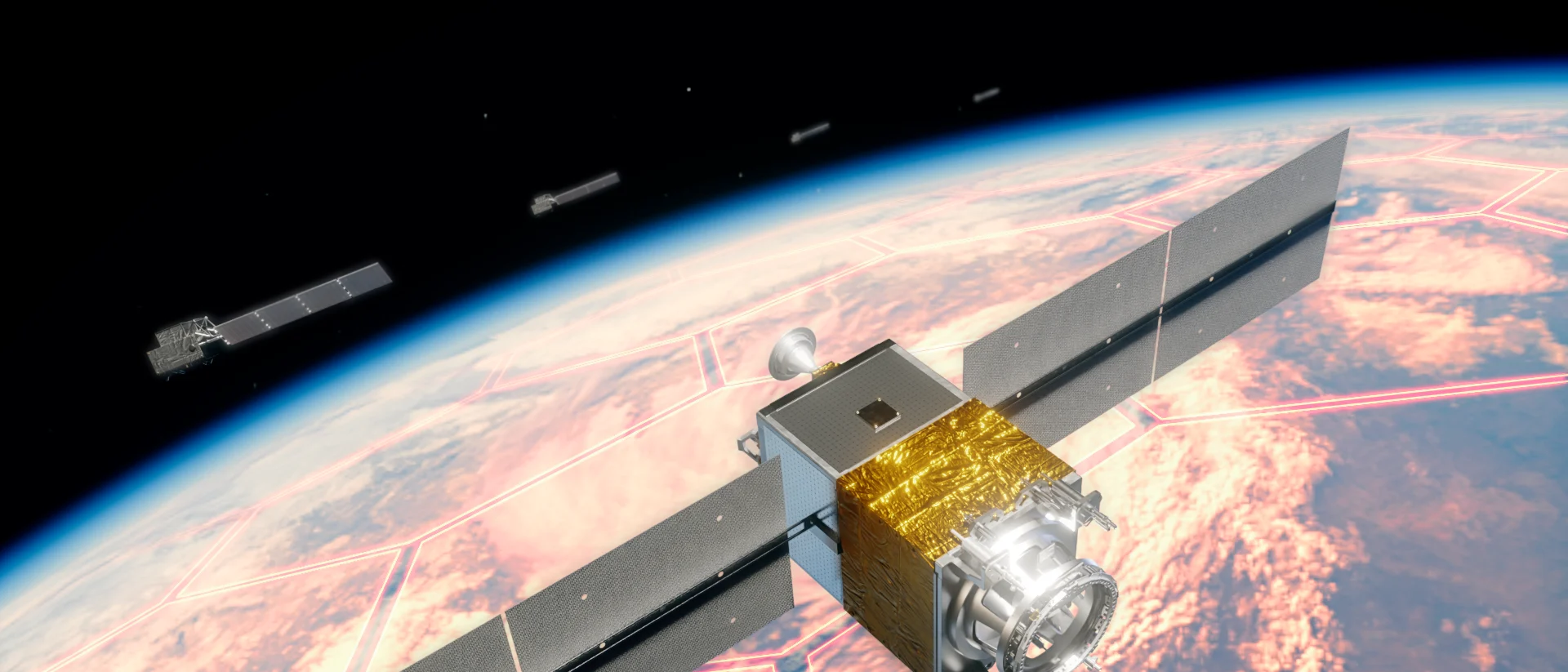
Refueling was flagged as the leading market demand signal and the gateway to other capabilities including maneuver, inspection, space domain awareness, rendezvous and proximity operations, and deorbit. Astroscale U.S.’s Provisioner™ is slated to conduct the first-ever refueling of a U.S. Space Force asset and will be launch-ready this year.
Beyond a fundamental shift in how space operations are designed, another necessary transition is rethinking how satellites are made; most are unprepared for servicing, meaning there’s no docking port or refueling interface.
While Wes and Mike agree that logistics and servicing are foundational elements of military space power, they also believe America risks losing its orbital advantage by holding onto old ways of thinking and overlooking these crucial components.
Watch the full conversation here and read more about our position on orbital logistics here.